youki hirakawa
Intolerance
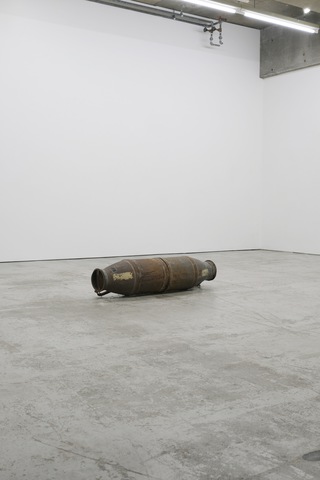
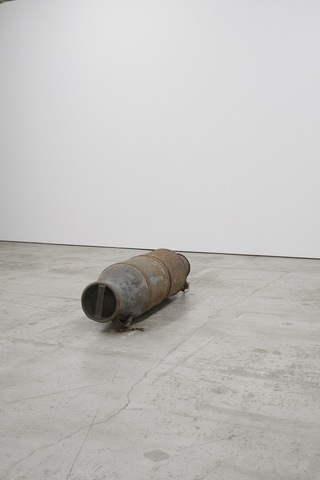
Intolerance / 2025
Two milk churns
The rapid Westernization of the Japanese diet, structurally promoted as a biopolitical national policy—particularly the consumption of milk—fundamentally altered the metabolic landscape of the nation. The post-WWII distribution of powdered milk and the implementation of school lunches were ostensibly initiated to combat childhood starvation; however, they were inextricably linked to the geopolitical export strategies of U.S. agricultural surpluses, institutionalized through Public Law 480 (PL480). This structural imposition evolved into a pervasive form of food colonialism, effectively transforming the Asian digestive tract into a literal territory of the Cold War.
This biopolitical and disciplinary mechanism, driven by state-led propaganda, positioned the consumption of dairy as an absolute standard of health and development, fostering a powerful "milk myth" that perpetuates widespread milk consumption to this very day. Yet, it violently rendered invisible the reality that over 80% of the non-white Asian population is lactose intolerant. This ongoing history of semi-coercive assimilation, wherein an indigenous biological reality is continuously suppressed by structural legacy, perfectly parallels the unexploded ordnance buried beneath our cities. Even now, eighty years after the war, roughly 30 tons of unexploded bombs continue to be unearthed across Japan every single year. They remain a dormant, haunting presence, waiting to detonate within the depths of our own bodies.

+Perosnal Background
For myself and my family, who spent my early childhood in the rural farmlands at the tip of the Atsumi Peninsula, milk was a profoundly intimate presence. A cowshed stood directly behind our home, providing us with freshly squeezed milk. That dark space, thick with the scent of cow dung and straw, served as my childhood playground.
Equally, though perhaps difficult to imagine, unexploded ordnance was also an immensely familiar presence. Residing in the local police substation, our home functioned as the primary contact point for the dozens of unexploded bombs discovered annually along the coastline and in the rice paddies. It was a mundane, everyday occurrence for locals to bring these dormant bombs directly to our doorstep. Finding an unexploded bomb casually resting in my play area was a routine sight: a grimy, rusted object that I was strictly forbidden to touch.
Yet, unexploded bombs were not the only things washing ashore; drowned bodies drifted in from the sea as well. In the primal landscape of my childhood, those washed-up bodies and the unexploded ordnance seamlessly overlapped—a visceral memory that constantly feels as though it might be swept away and erased by the sound of the sea breeze.
*The Atsumi Peninsula was once home to the largest test firing range in the East, and housed countless ammunition depots.
<<Blast wall constructed at the site of a US-made 250kg unexploded bomb found in 2023.
JavaScript is turned off.
Please enable JavaScript to view this site properly.